The Happiness Story Isn’t What You Grew Up Hearing
For decades, researchers described happiness across a lifetime as a U-shape: high in youth, dipping through the so-called midlife crisis, then climbing back up in your later years. Newer research is complicating that tidy picture, but one finding keeps holding up: older adults consistently report strong emotional well-being, often stronger than people in their 30s, 40s, and 50s. The interesting part isn’t the shape of the curve. It’s why it happens.
It’s Not About Having Fewer Problems
Older adults aren’t happier because life gets easier. Health concerns, loss, and physical limitations tend to increase with age, not decrease. Researchers who study this, including psychologist Laura Carstensen’s work on socioemotional selectivity, point to something different: as people become more aware that time is limited, they naturally shift their attention and energy toward what matters most. Priorities narrow. Petty conflicts matter less. Meaningful relationships and present-moment experiences move to the front of the line.
Older Adults Get Better at Managing Their Emotions
Multiple studies point to something researchers call the positivity effect. Compared with younger adults, older adults tend to pay less attention to negative information, recover faster from stress, and hold onto positive memories more readily. This isn’t denial. It’s a learned skill, built from decades of practice regulating emotions and choosing what to focus on.
Relationships Get Deeper, Not Just Fewer
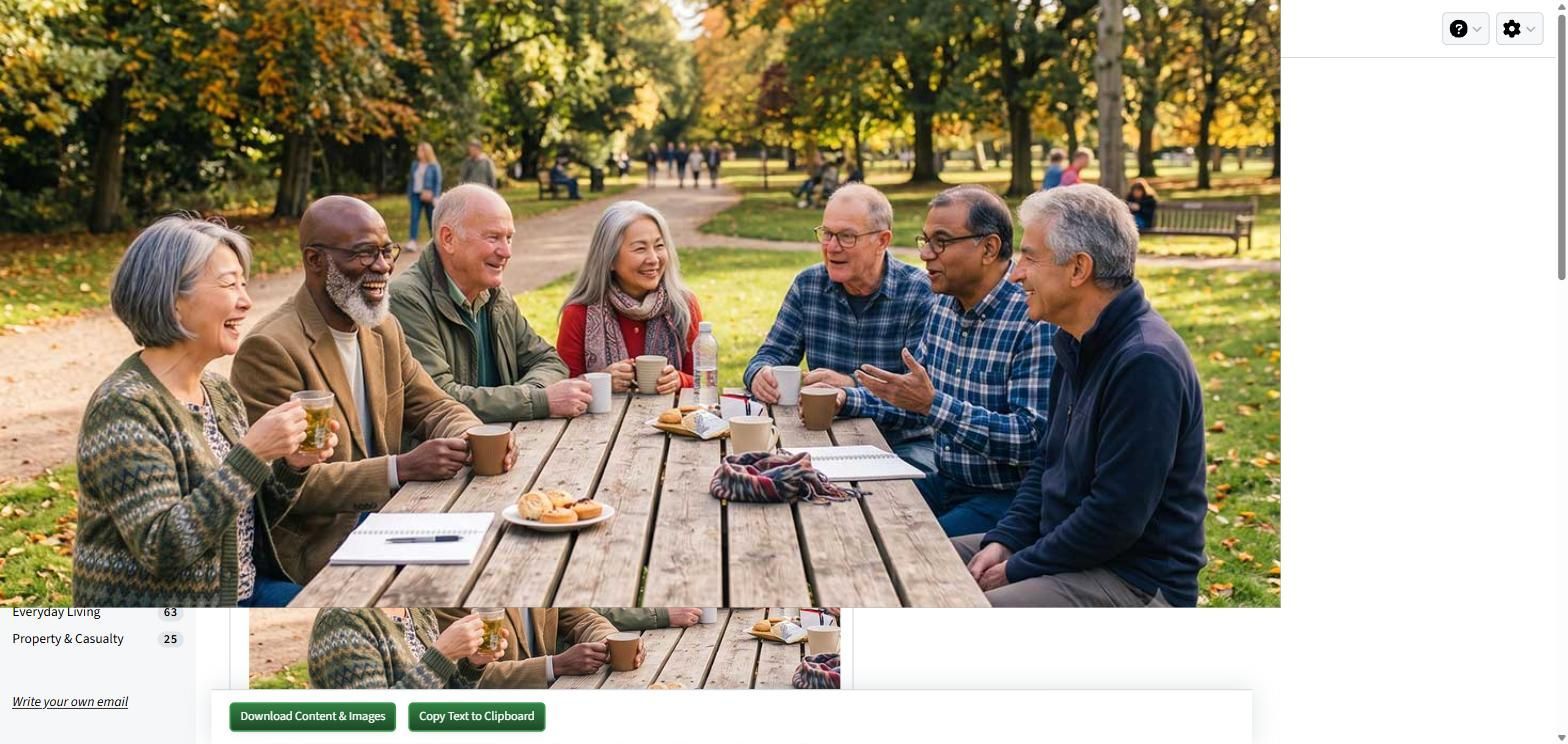
Research on aging consistently links close relationships with spouses, adult children, and friends to higher happiness in later life. But it’s not about the number of relationships. Older adults tend to trim their social circles and invest more deeply in the handful of relationships that genuinely matter to them. That shift toward quality over quantity shows up again and again as a strong predictor of well-being.
Three Lessons You Can Borrow at Any Age
Trim your circle on purpose.
You don’t need more friends. You need a few relationships you actually invest in.
Practice noticing the good.
Older adults don’t ignore hard things, they’ve just built the habit of also registering what’s going right. That habit can start at any age.
Ask what actually matters before your calendar fills up.
You don’t need to wait until later in life to prioritize the people and activities that matter most to you.
Older Adults Also Tend to Compare Themselves Less
Younger adults often measure their lives against a moving target: a coworker’s promotion, a friend’s new house, a stranger’s highlight reel online. Researchers have found that this kind of social comparison tends to fade with age. Older adults are more likely to judge their lives against their own values and history rather than against other people. That shift alone removes a major source of everyday dissatisfaction, and it’s a habit you can start practicing well before you retire.
A Word of Caution About the Research
It’s worth being honest that this is an active area of study, and researchers don’t all agree on the details. Some recent analyses challenge the classic U-shaped curve entirely, arguing that once you control for survey biases, happiness looks more like a slow decline with a small uptick around the early 60s, followed by a steeper drop in very old age tied to health decline. Other work still finds strong support for a late-life rebound. What almost none of the research disputes is the core idea: older adults, as a group, tend to report meaningfully higher emotional well-being and life satisfaction than middle-aged adults, even while facing more physical limitations. The mechanism, not the existence of the pattern, is what’s still being debated.
It’s Never Too Early to Start
The research is still evolving, and no single study has the final word on exactly how happiness moves across a life. But the underlying lesson holds regardless of the exact curve: emotional well-being isn’t just a matter of circumstance. It’s shaped by where you put your attention and who you choose to spend your time with. Those are habits worth building now, whatever age you’re starting from, and they tend to compound the same way good financial habits do.